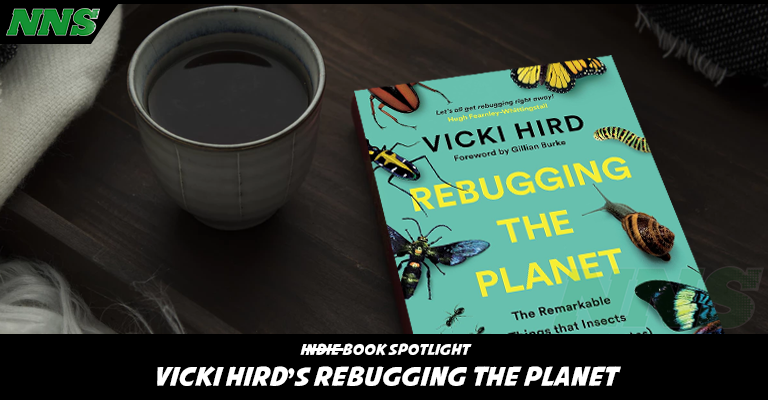
Welcome back, Readers! As the seasons change and we look to spend more time outdoors, I decided to indulge one of my many and varied interests and check out this book on how we can be better neighbors to some of the more controversial critters we share our space with! It’s no secret that not everyone likes insects, arachnids and their myriad fellow invertebrates. What’s less talked about is how desperately our planet needs them and how much we all rely on them to go about their business. If this is a topic you’re even a little curious about, this is the book for you!
So, grab your magnifying glass (Be careful to angle it AWAY from the sun!) and let’s explore the world of bugs together!
Book Stats
- Author: Vicki Hird.
Formats: Paperback, Kindle, and Audible.
Price: $21.28 for Paperback, $12.99 for Kindle (Currently available for free via Kindle Unlimited!), and $12.90 for Audible, or one Credit on Audible.
Length: 224 pages or 5 hours, 34 minutes in audio format.
Narrator: Lorna Bennett
Number of books in the series: it’s a standalone work.
Basic Premise
So, being as this is a non-fiction book, there’s no plot to keep track of. There are many stories, though! Charming anecdotes about chasing cockroaches through labs, pet millipedes, hunting isopods in backyards and trips to remote locales where the range and number of invertebrates will be different to what you know. There are also some relatively in-depth sections about people who are in the process of re-wilding places, too, and the improvement to invertebrate populations brought about by these projects.
I use the term invertebrates pretty deliberately as this book covers not just arthropods (Insects, arachnids, myriapods and crustaceans. To put into perspective how large of a group this is, they make up over 80% of all currently described species.) but delves into molluscs, worms and even has some interesting bits about single celled organisms. (I always smile when someone talks about Moss Bears which is a very cute name for tardigrades.) So, if you’re a bit of an arachnophobe but can handle learning a bit about slugs or leeches? This book has you covered.
It goes into detail about all the ways that our planet needs the work bugs do and how we as a species rely almost completely on it as well; it even includes some interesting financial statistics that put it into a monetary perspective for you filthy capitalists out there!
There are a lot of ideas how you can make your own space a little more welcoming to little critters as well – some fun projects you could do for yourself or as a family.
For being such a small book about such diminutive little souls, it has a massive amount of content!
My Take
I was a nature kid. I lived in a small, rural town growing up and so I was spoiled by the sheer depth and breadth of wild experiences I was able to enjoy. Finding isopods (Locally called slaters.) under old wood piles, hunting for (But never finding, perhaps luckily for me.) the native venomous spider, the katipo, in the wilderness. Digging for worms to put in my mom’s garden, relocating snails from mom’s garden to other areas of the yard, counting moth species under the porch light and being bitten to hell and back by the mosquitoes and sandflies that sought me out whenever I was near a river or creek. Jumping, startled out of my chair whenever a huhu beetle decided it wanted to check out the light cast by our living room windows. (They’re beetles that can be over two inches long, and they hit window glass like little battering rams. You can also eat the grubs which are usually longer than the adults and taste like peanut butter when cooked.)
…if you can’t tell, I come from New Zealand originally! I promise I didn’t make any of the above animals up!
In short, this book hit me right in the nostalgia and also made me a little sad. Hopeful, too! But sad. I don’t know how many of those same life-affirming experiences my kid will ever get to engage in. By the time he’s old enough to play outside and look for small creatures to befriend, the worldwide decline in invertebrate species is projected to be bad enough that global food production and natural ecosystems are likely to have been markedly affected.
But, having said that, the idea that a book like this exists at all and that it might help people understand our tiny neighbors a bit better gives me some hope! I was mostly reading this one for fun and was planning to Spotlight a narrative as per usual this month, but figured hey – more eyes on it might do the world some good!
Our narrator is Lorna Bennett. While this isn’t a story and so we don’t have need for different voices or emotive voice work, she does a wonderful job anyway and this book is a delight to listen to. She does a much better job than I would when it comes to reading aloud species names and other technical language, too.
I definitely recommend this book if you like nature, want to learn more about bugs and why they’re so important, or if you want to share it with a kid and teach them about the cool creatures this world contains that maybe aren’t the usual kittens, puppies and ducklings.
Facebook Comments